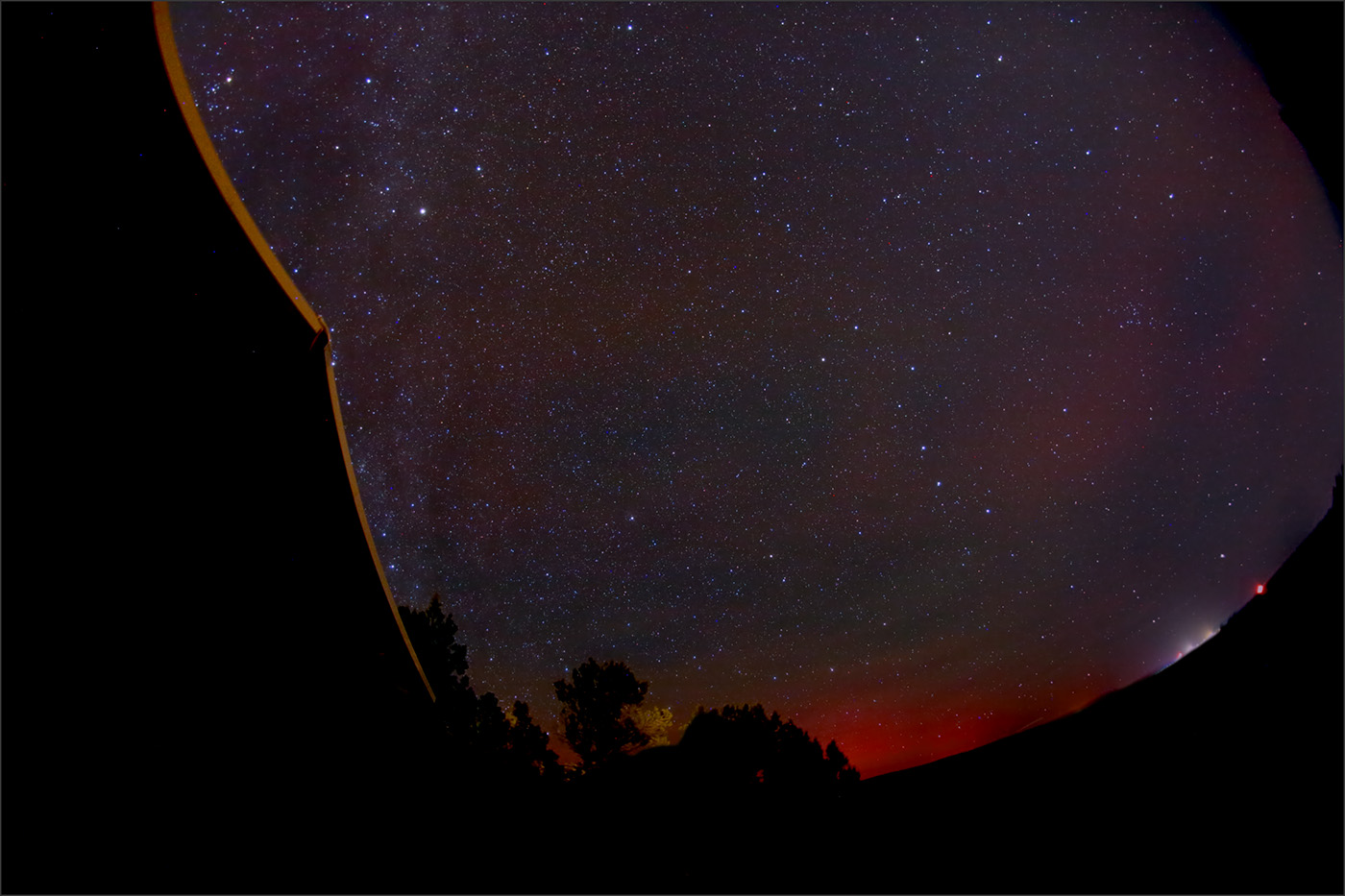
Payson Aurora
January 19- 21, 2026

Uploaded 1/22/26

| Two
nights in a row, we recorded the impact of a huge solar Coronal
Mass Ejection from a flare a few days before, resulting in one
of the strongest aurora storms across the US in over 20 years.
Here in Arizona, the impact was far more subtle due to our southerly
lattitude, and we saw some very dim red glows to the north for
two nights straight. Fortunately, with our especially red sensitive
camera and the tracking Aurora Cam I was able to record all night
long automatically the entire two nights where the Kp index was
over 7. Here are a few of the more interesting shots taken over
those two nights. |
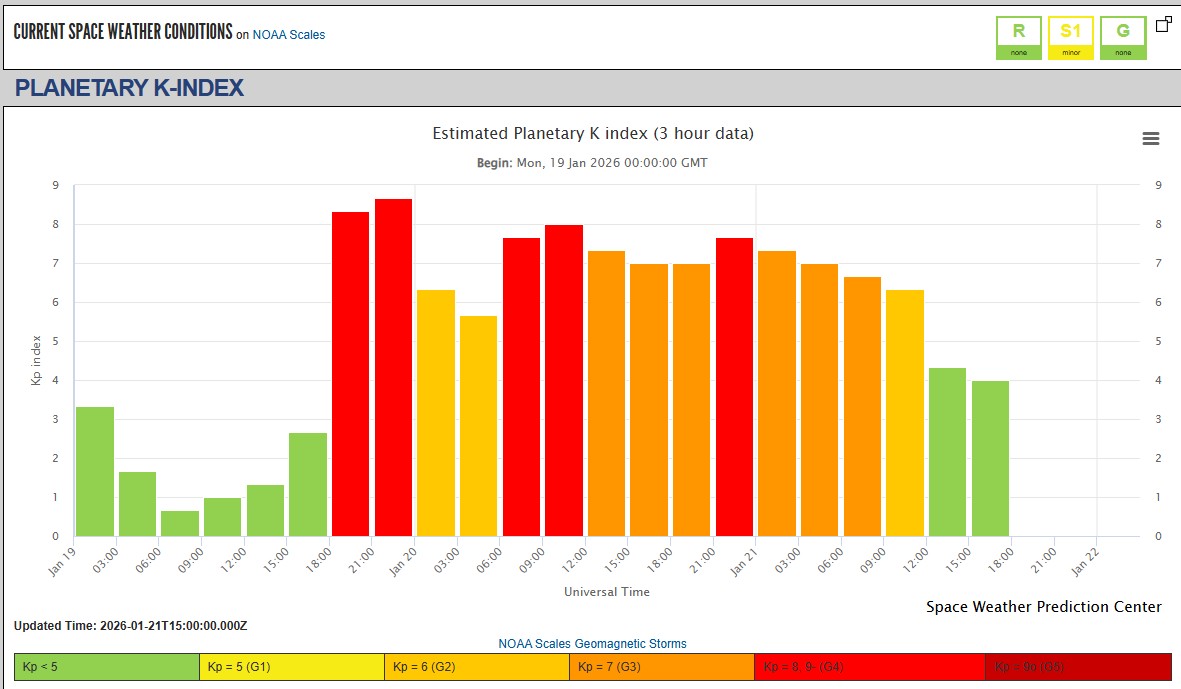
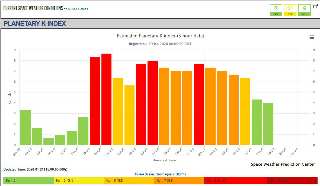 Here is the Kp index for both nights. You can
see that the impact was hard and fast on night 1,
and the level continued though the day and
a brief blip the second night near morning
finished the event.
Here is the Kp index for both nights.  You can
see that the impact was hard and fast on night 1,
and the level continued though the day and
a brief  blip the second night near morning
finished the event.
|
Select an image size for a larger view:

1290 x 960
|
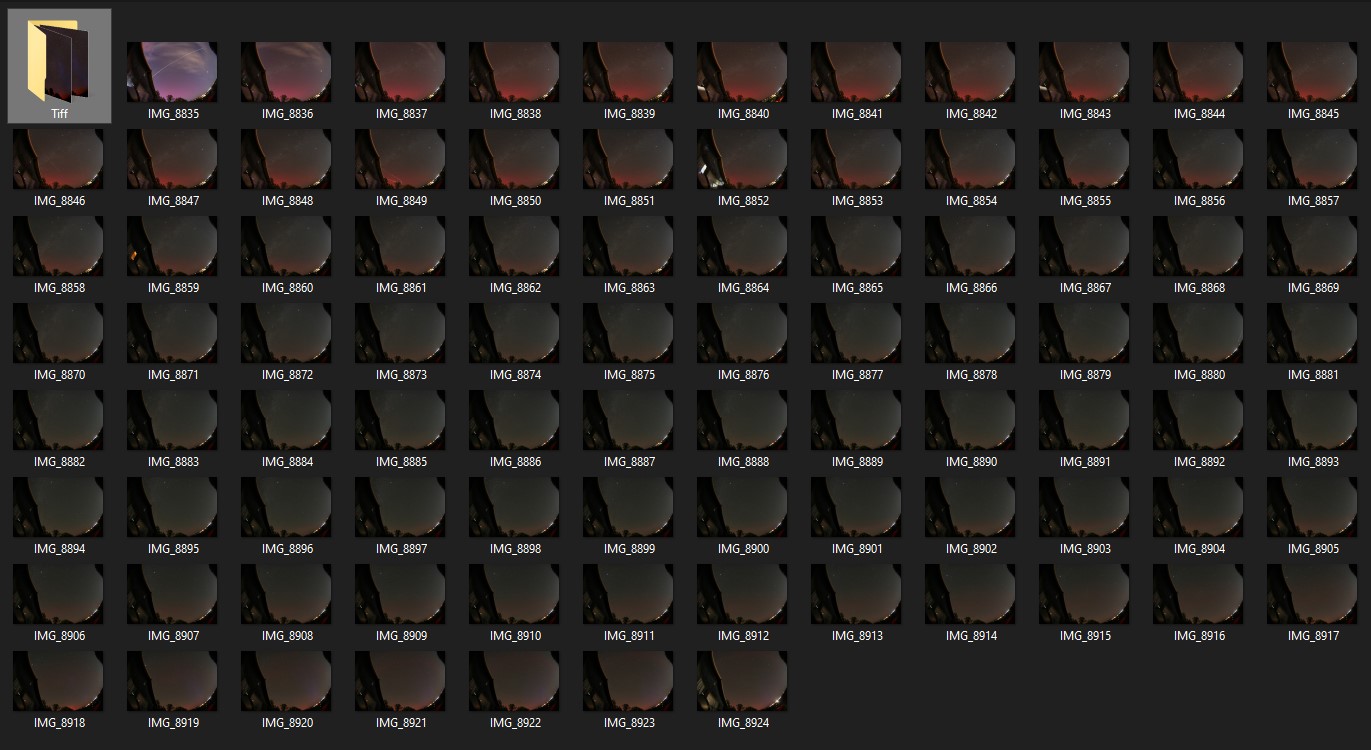
January 19th: 6:50 pm to 5am
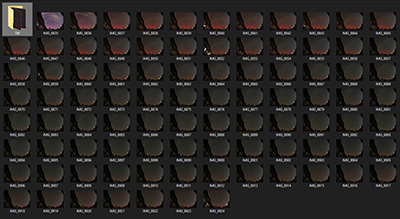 Here is a panel of thumbnails showing all the
photos taken automatically in one night. The aurora
can be seen to change from frame to frame, highlighting
the need to shoot continuously all night long when the
kp index is high.
Here is a panel of thumbnails showing all the
photos taken automatically in one night.  The aurora
can be seen to change from frame to frame, highlighting
the need to shoot continuously all night long when the
kp index is high.
|
Select an image size for a larger view:

1290 x 960
|
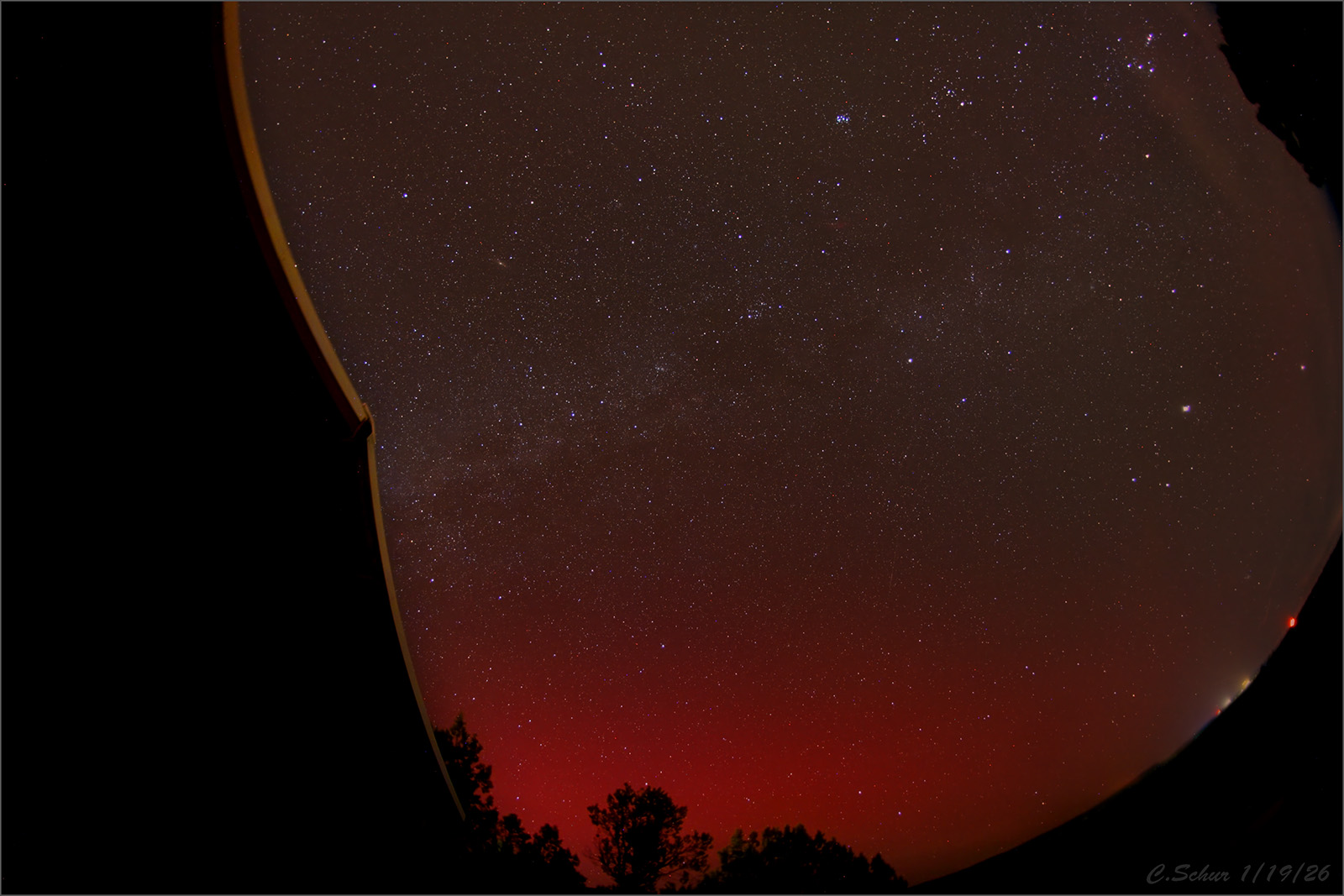
 Early on on the first night at around 7pm deep red
but diffuse glows to the north.
Early on on the first night at around 7pm deep red
but diffuse glows to the north.
|
Select an image size for a larger view:

1290 x 960
|
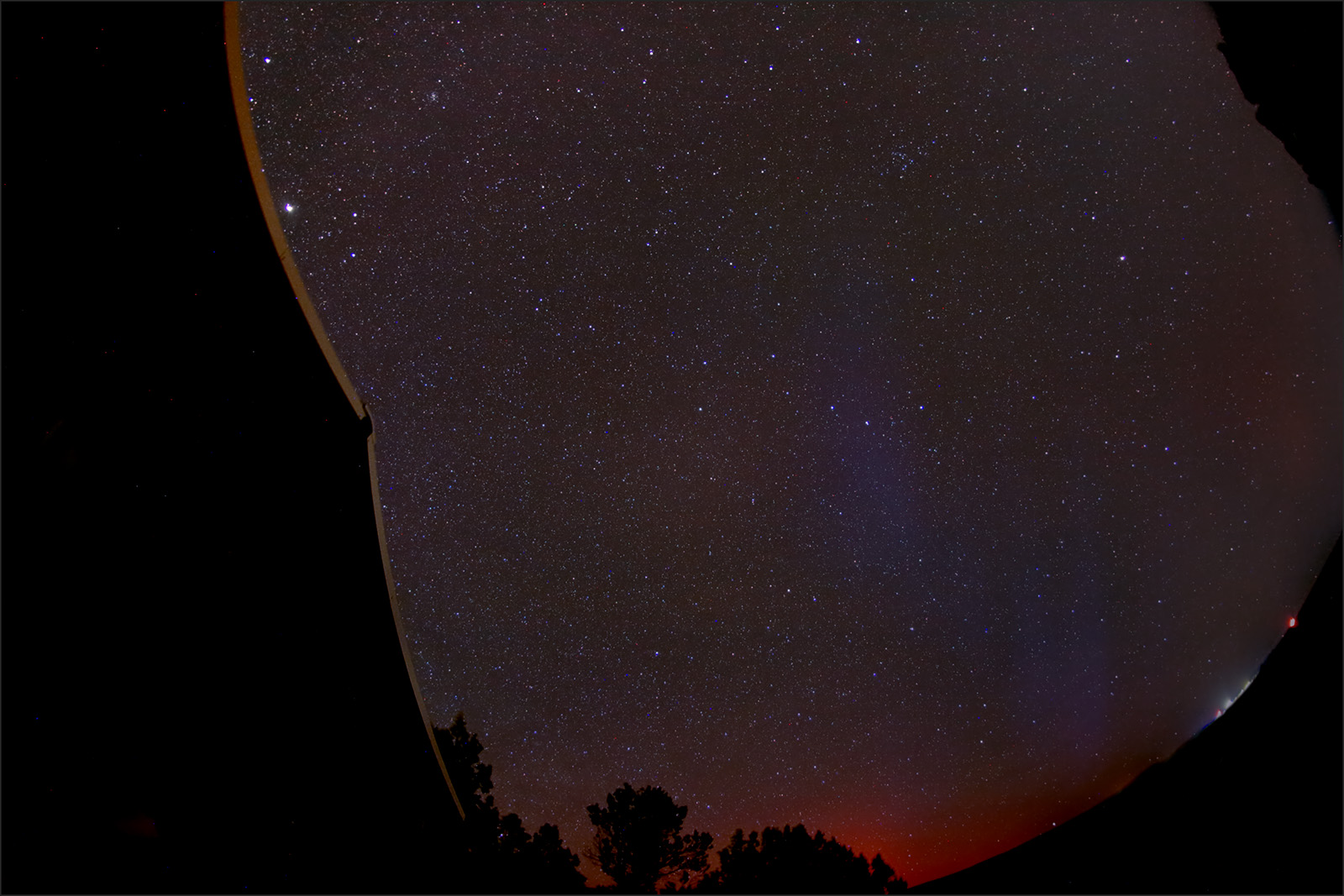
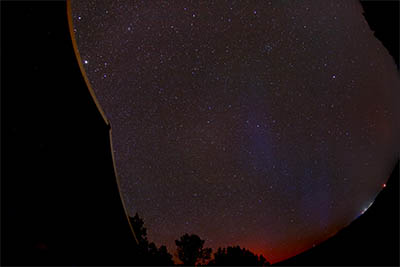 Around 2:30 in the morning, a set of blue rays appeared
for about half an hour and were huge! Remember that
this is a 180 degree fishe eye lens.
Around 2:30 in the morning, a set of blue rays appeared
for about half an hour and were huge!  Remember that
this is a 180 degree fishe eye lens.
|
Select an image size for a larger view:

1290 x 960
|
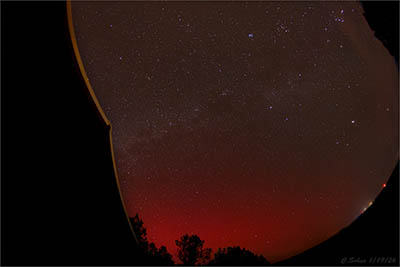
January 20th: 7:00 pm to 5am
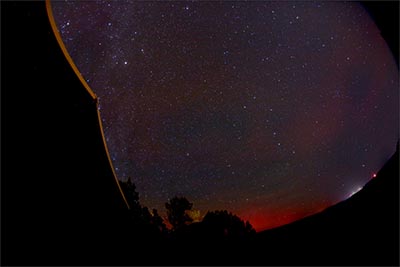 Much calmer the second night, almost nothing until
near morning when this glow appeared to the north.
The red haze in the sky is cirrus clouds not aurora.
Much calmer the second night, almost nothing until
near morning when this glow appeared to the north.
The red haze in the sky is cirrus clouds not aurora.
|
Select an image size for a larger view:

1290 x 960
|
Instrument: Sigma 8mm f/3.5 fisheye lens
Platform: Robotic Barn Door Mount
Camera: Hutech Modified Canon XTi @ ISO400
Exposure: 5m
Filters: None
Location: Payson, Arizona
Elevation: 5150 ft.
Sky: Seeing 8/10, Transparency 7/10
Outside Temperature: 45F
Processing Tools: Photoshop CS2, Maxim DSLR
HOME GALAXIES EMISSION NEBS REFLECTION NEBS COMETS
GLOBULARS OPEN CLUST PLANETARIES LINKS
|